

Running OpenProject self-hosted means installing its free, open-source Community Edition on your own server instead of paying for its cloud plan — the software license costs nothing, but you take on the server, the database, the backups, and the upgrades yourself. The real decision isn't "free vs. paid," it's whether your team has someone willing to own that infrastructure.
TL;DR:
- OpenProject's Community Edition is free and GPLv3-licensed, so it's legal and common to use commercially, self-hosted, forever.
- "Self-hosted" shifts the cost from a subscription to a server bill plus someone's time for backups, updates, and troubleshooting.
- OpenProject resembles Jira in structure (issues, workflows, Gantt charts) but not in license — Jira's self-hosted tier targets enterprises, not small teams.
- The "best" self-hosted tool depends on whether you need sprint boards and custom workflows or just jobs, dependencies, and a calendar.
- A one-time-purchase alternative like ReplaProject removes the server-maintenance question entirely, at the cost of OpenProject's deeper customization.
Table of Contents
- OpenProject Self-Hosted: What You're Actually Signing Up For
- Is OpenProject Free for Commercial Use? The License vs. the Edition
- Is OpenProject Like Jira? Same Shape, Different Spine
- What Self-Hosting OpenProject Actually Costs You, Beyond the License
- The Best Self-Hosted Project Management Software Depends on Who's Asking
- Reddit, GitHub, and the "2022" Question: Is Any of This Still True?
- Get Unlimited Seats and Zero Server Upgrades for $399
- Frequently Asked Questions
- Sources
OpenProject Self-Hosted: What You're Actually Signing Up For
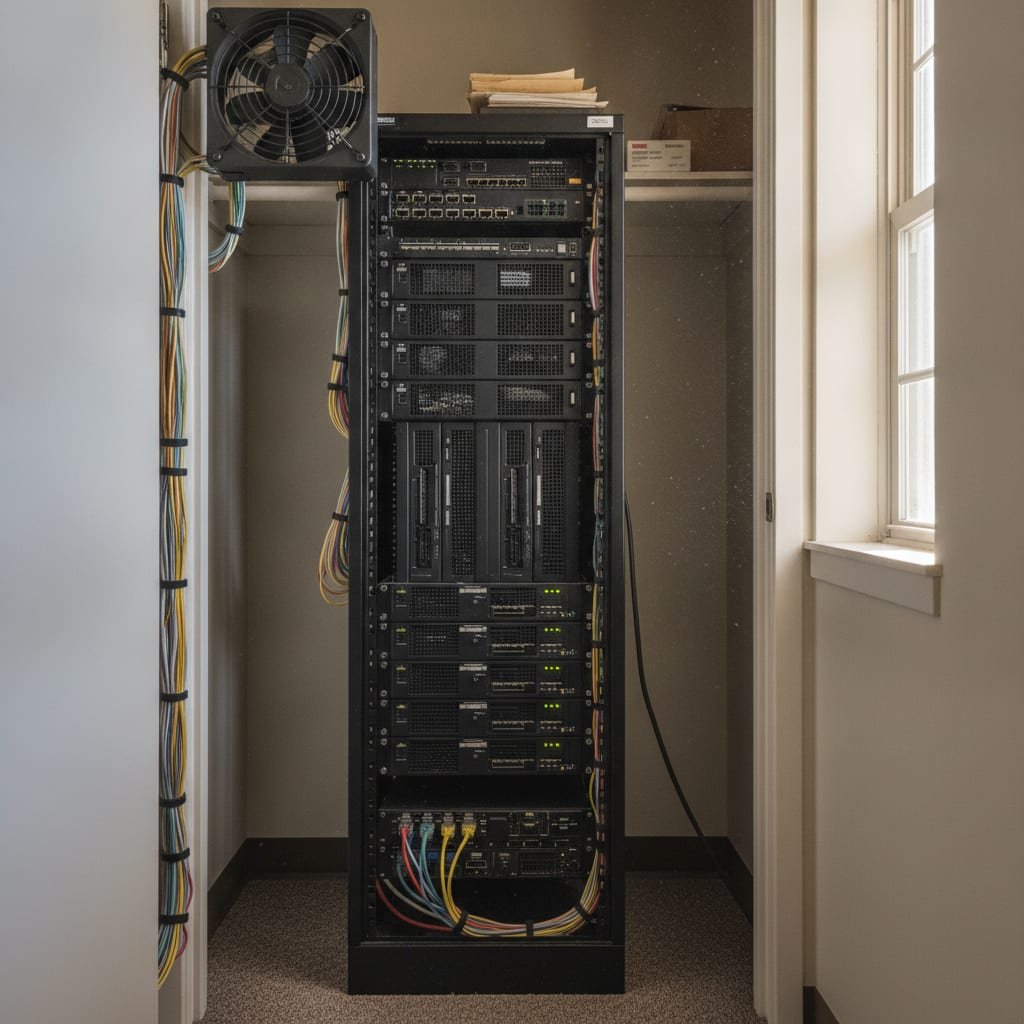
"Self-hosted" means you run OpenProject's Community Edition on a server you control — a VPS, an office machine, a Kubernetes cluster, whatever you've got — instead of logging into OpenProject's own cloud. The software itself, distributed through OpenProject's GitHub repository, is free to download and free to run. What you're signing up for isn't a bill. It's a job: provisioning the server, keeping Postgres and Redis alive, renewing the SSL certificate, and running the upgrade script every time a new version ships.
OpenProject's Community Edition costs $0 to download and run forever. The cost shows up later — in the server bill, the failed upgrade, and the afternoon someone has to lose to fixing both.
That trade-off is the whole story with self-hosted software, and it's worth reading the broader case for and against it in Self-Hosted Project Management: What Actually Matters before you commit a weekend to a Docker install.
Is OpenProject Free for Commercial Use? The License vs. the Edition

Yes. OpenProject's Community Edition is licensed under the GNU General Public License v3, which explicitly permits commercial use, modification, and redistribution. You can run it for a construction company, a law firm, or a 40-person agency without paying anyone a license fee. That's the open-source promise, and OpenProject keeps it.
Where money enters is the paid tiers. OpenProject's own pricing page lists an Enterprise Cloud plan (hosted by OpenProject, billed per user) and an Enterprise On-Premises add-on (support, extra features, and SLAs layered on top of a self-hosted install). The free Community Edition is the full project-management core — boards, Gantt charts, time tracking, work packages. The paid tiers add things like enforced two-factor authentication, custom fields at scale, and a support contract you can actually call. Most small teams never need the upgrade.
Is OpenProject Like Jira? Same Shape, Different Spine

Structurally, yes — closer than almost any other open-source tool gets. Both use a ticket-style "work package" or "issue" as the atomic unit, both support configurable workflows and statuses, both render Gantt-style timelines, and both let you build custom views for different teams. If you've used Jira, OpenProject will feel familiar within an hour.
The difference is the spine underneath. Atlassian's own Data Center page positions Jira's self-hosted option as an enterprise product — licensed per user tier, aimed at organizations that need to keep data on-premises for compliance reasons, not at a five-person shop trying to dodge a subscription. OpenProject was built self-hosted-first and open-source from day one, which is why it shows up constantly in threads comparing the two: people aren't just asking which tool has more features, they're asking which one they're actually allowed to run for free.
Pro Tip: Before you migrate a team off Jira or Trello, export your existing workflow statuses and custom fields first. OpenProject's importer handles standard fields fine, but teams that skip this step usually rebuild half their workflow from memory two weeks in — and discover they forgot the one status everyone actually used.
What Self-Hosting OpenProject Actually Costs You, Beyond the License
The license is free. Everything downstream of the license has a price tag, even if no invoice ever shows up for it directly.
| Line Item | What It Involves | Who Usually Pays It |
|---|---|---|
| Server (VPS or on-prem box) | $5–$40/month depending on team size and data volume | Whoever has the company card |
| Database maintenance | Postgres backups, storage growth, occasional tuning | IT person, or the owner at 10pm |
| SSL certificate renewal | Automated if set up right, a fire drill if not | Whoever set it up (or didn't) |
| Version upgrades | Reading changelogs, testing, running migrations | The person who installed it originally |
| Downtime during upgrades | Minutes to hours, depending on how it goes | Everyone, at once |
None of these line items is large on its own. Stacked together, they're the reason "self-hosted and free" and "free" are two different sentences. If you want the deeper breakdown of where that time actually goes — and which of it can be automated away — see Self-Hosted Task Management: What It Buys You, What It Costs.
The Best Self-Hosted Project Management Software Depends on Who's Asking
There's no single best answer here, and anyone who gives you one is selling something. If your team runs agile sprints, needs custom workflow states per department, and has someone on staff who enjoys server administration, OpenProject is a genuinely strong, free, self-hosted answer — arguably the most feature-complete open-source option that still gets actively maintained.
If your team is a five-person office or a crew of subcontractors who need to see what job is next, who's blocked on what, and what came in by email this morning, OpenProject's depth works against you. You'll spend your first month configuring workflow states instead of running jobs. That's the exact gap covered in Project Management Tasks: What They Are and Who Owns Them — the tool should match how your team actually assigns and tracks work, not the other way around.
Reddit threads on this topic tend to split the same way. Developers praise OpenProject's Gantt charts and dependency tracking; small-business owners in the same threads complain about the learning curve and the Ruby-on-Rails upgrade process. Both groups are right, about their own situation.
Reddit, GitHub, and the "2022" Question: Is Any of This Still True?
Searches for "OpenProject self-hosted 2022" usually come from people who found an old installation guide and want to know if it still applies. The short answer: mostly, but check the version number. OpenProject has shipped multiple major releases since 2022, and the Docker Compose setup, the recommended Postgres version, and a few configuration flags have all changed. An installation guide from 2022 will get you most of the way there and then fail silently on one dependency — annoying, not catastrophic, but budget an extra hour.
On GitHub, the project remains active: regular commits, a public issue tracker, and a release cadence that's kept pace with security patches. That's a genuinely good sign for a self-hosted tool — plenty of open-source project-management software dies quietly, and you don't want to build your operations on something nobody's patching anymore.
Get Unlimited Seats and Zero Server Upgrades for $399
If what you actually need is a board, a table, and a calendar view of every job — not sprint velocity charts or custom workflow engines — ReplaProject is built for that smaller, more common problem. It's a one-time $399 purchase, self-hosted, with unlimited users for one flat fee: no per-seat bill that climbs every time you hire someone, and no server to patch at 10pm. Email-to-task intake turns a forwarded message into a job automatically, a public intake form catches customer requests, and dependency tracking is detected automatically instead of configured by hand.
The honest limit: it's not a Jira replacement. If you need custom workflow states, agile sprint boards, or deep API integrations, OpenProject's Community Edition will do more — for free, if you're willing to run the server. ReplaProject trades that depth for the thing most small trades and office teams actually want: fewer settings, no maintenance, one price. Check both spec sheets, including ours, before you decide which trade-off you'd rather live with.
Frequently Asked Questions
Is OpenProject free for commercial use?
Yes. OpenProject's Community Edition is licensed under GPLv3, which permits commercial use without any license fee, and it's free to self-host indefinitely. Paid Enterprise tiers add support and extra features but aren't required to run the core software for a business.
What is the best self-hosted project management software?
It depends on what your team actually does day to day. OpenProject suits teams running agile workflows with someone able to maintain a server; simpler tools win for teams that just need jobs, dependencies, and a calendar without the configuration overhead.
Is OpenProject like Jira?
Structurally, yes — both use ticket-style work items, configurable workflows, and Gantt-style timelines. The real difference is licensing: OpenProject is open-source and free to self-host, while Jira's self-hosted Data Center tier is priced for enterprise deployments.
How much does OpenProject cost?
The Community Edition is free to download and self-host forever. Costs appear if you choose Enterprise Cloud (a per-user monthly fee for hosted service) or Enterprise On-Premises support, or indirectly through server hosting, backups, and the staff time needed to maintain a self-hosted install.
Why do installation guides for OpenProject from 2022 sometimes fail?
OpenProject has shipped several major releases since 2022, changing recommended Postgres versions and parts of the Docker Compose configuration. Older guides usually still work for most of the setup but can fail on one outdated step, so check the version number against current documentation first.
Is OpenProject actively maintained on GitHub?
Yes. The project shows regular commits, a public issue tracker, and a consistent release cadence that includes security patches, which is a meaningful signal for anyone planning to run it long-term in production.
Sources
- OpenProject Pricing | OpenProject
- OpenProject Source Code | GitHub
- GNU General Public License v3.0 | GNU Project